
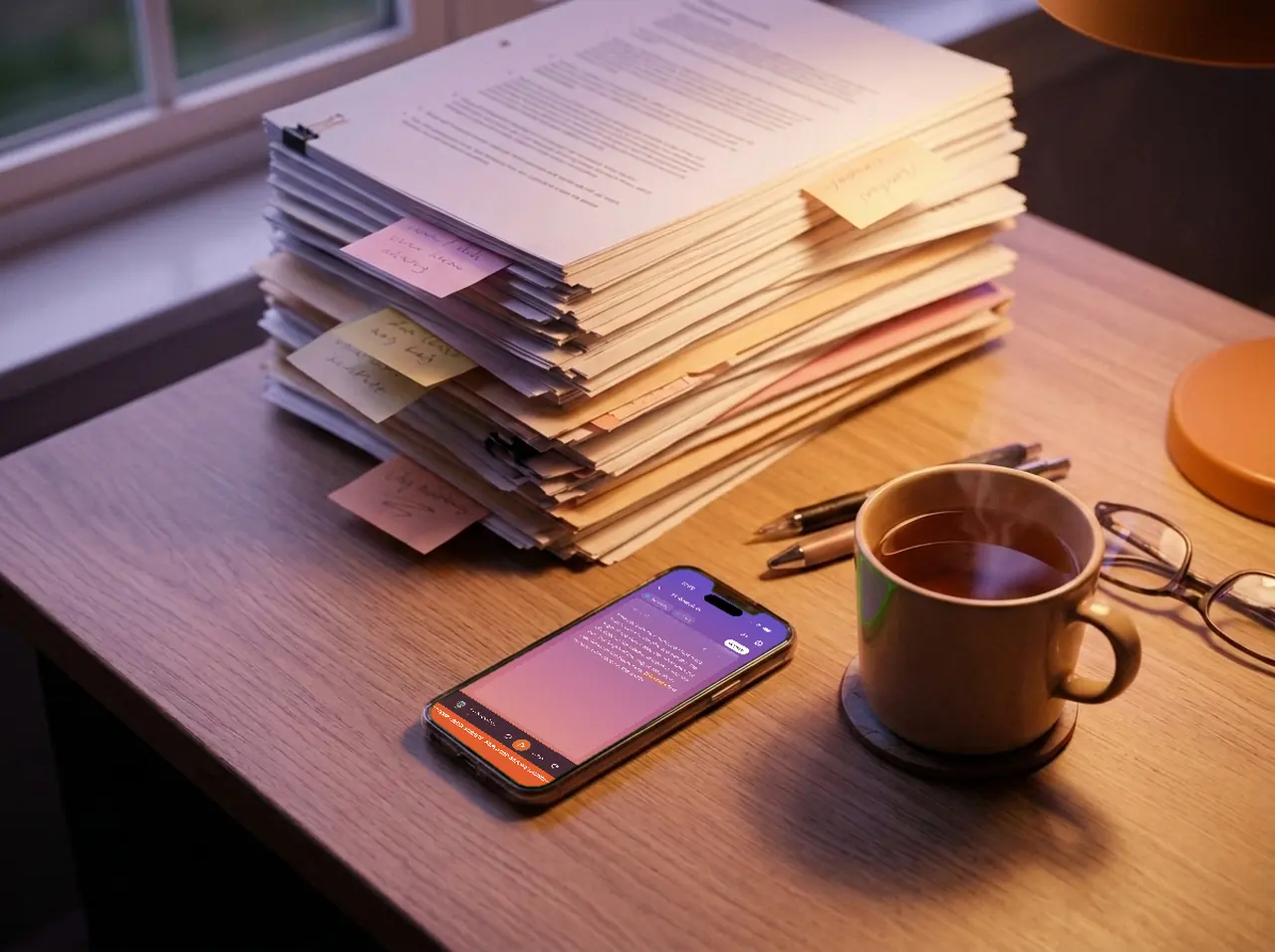
If you work with documents, you probably know the feeling. You clear your reading on Monday, and by Wednesday it's back. A spec here, a report there, notes from a call you were on, a research summary someone asked you to look over.
It's easy to decide the problem is you. That you should read faster, get up earlier or be more disciplined about it. It isn't, and here's why.


The writing got faster. The reading didn't.
A few years ago, a twenty-page document took someone a day or two to write. Now AI tools draft one in minutes. Specs, briefs, meeting summaries, research digests and project notes all arrive faster, and in greater numbers, than they used to.
Reading didn't speed up to match. Most adults read non-fiction silently at around 238 words a minute. That's close to an hour and a half for a 20,000-word report, if nothing interrupts you.
So the pile grows. Not because you're slow, but because the people and tools writing to you have become much quicker, and your reading speed is the same as it always was.
More discipline won't fix it
The usual advice is to protect time for reading. Block out an hour, turn off notifications, work through the list.
It helps, but it runs into a hard limit. Your desk hours are already spoken for. Every hour you spend reading at your desk is an hour you're not spending on the work the reading was for.
Where listening helps
Listening isn't a way to read faster. It's a way to read at times you couldn't before.
Think about the hours in your week when your eyes are busy but your mind isn't. The walk to the station. The drive. Cooking dinner. A run. Folding the washing. None of them work for reading. All of them work for listening.
Add them up across a week and they often come to more than the time you could ever clear at a desk. That's where the pile goes.
What it looks like in practice
- Before you leave work, add the documents you didn't get to.
- Listen on the way home, or while you cook.
- The next morning, save your desk time for the ones that need a proper answer.
You'll still read some documents closely, pen in hand. Contracts, anything you have to sign, anything you'll be quoted on. Listening first means you come to that close read already knowing what the document says, so it goes quicker.
The part that matters most is finishing
A listening habit only works if the documents actually get finished. It sounds obvious, but it's where a lot of tools let people down. They stop halfway through, the voice gets tiring after twenty minutes, or the place is lost and the document never gets picked up again.
Aureley was built around finishing. It reads your PDFs, Word files, web links and Markdown notes aloud, remembers where you left off, on your phone and iPad, and reads to the end of the document. When your natural-voice hours for the month are used up, it carries on in your built-in voice instead of stopping.
Your reading pile isn't a discipline problem. It's a time problem, and listening gives you the time back.
Too much to read, not enough time. Aureley reads it all to you, in a natural voice, whenever you're ready.